

Ep #19: Advanced Idempotency in System Design
Premium Deep Dive: Edge Cases, Distributed Systems & Interview Q&A (Premium Series #3)

Ep #19: Breaking the complex System Design Components - Premium Post
⚠️ Note: This is a free preview of a premium post.
You’ll find some part of the breakdown below — if you’d like to read the full version and get access to all deep-dive system design content, click here to become a member.
Previously in Part 1
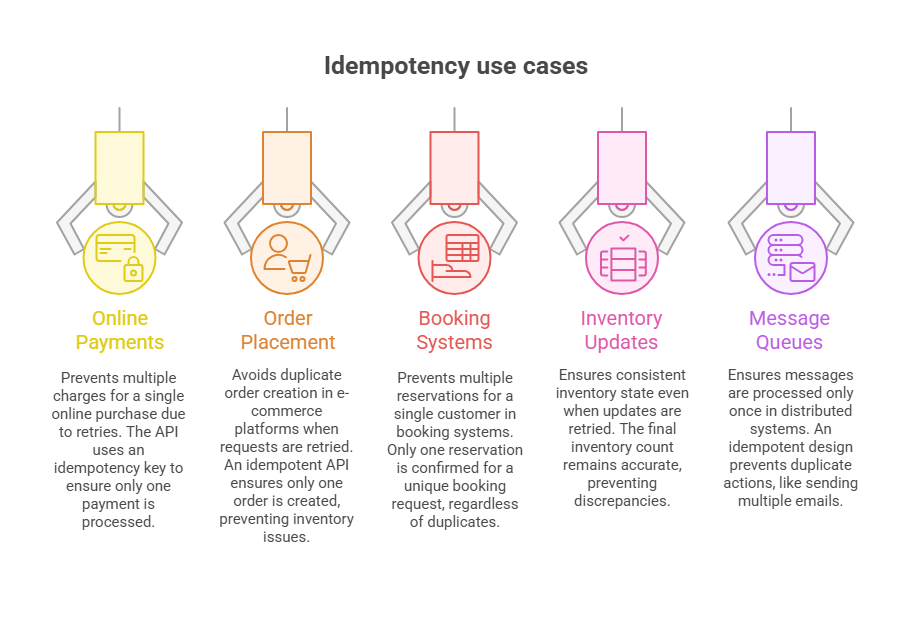
We explored what idempotency means, why it matters in API design, and how it's used in real-world systems like payment gateways and e-commerce.
How to Implement Idempotency
1. Key Design Principle: Use Idempotency Keys
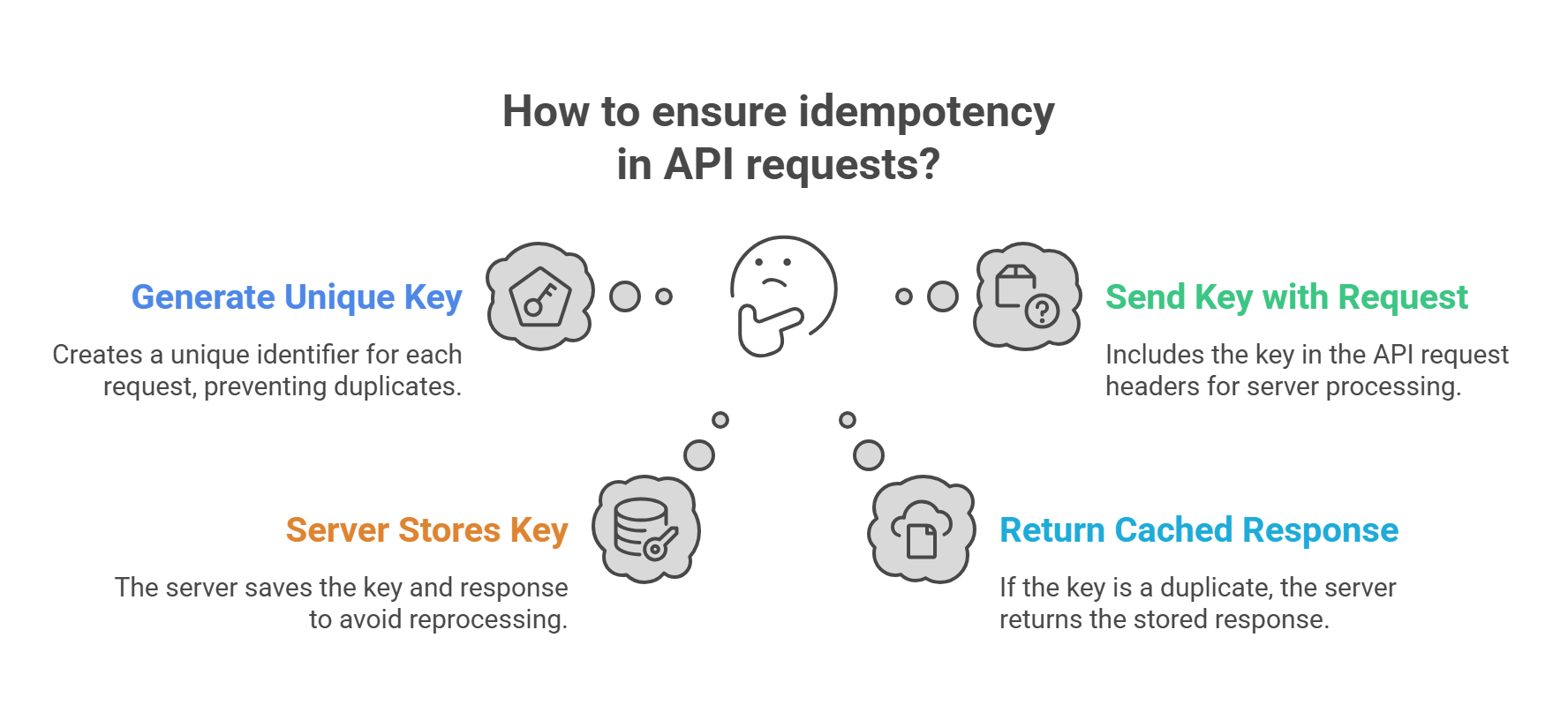
The most popular pattern is to have clients generate a unique “idempotency key” (a UUID) for every logical action (e.g. one order placement), sent with each API request. The server stores these keys, checks against duplicates, and only processes unique keys once.
How it works:
Clients generate a unique identifier (UUID or hash)
This key is sent with every API request (usually in headers as "Idempotency-Key")
The server stores the key with the request result
If a duplicate request arrives with the same key:
The server returns the cached response instead of reprocessing
POST /orders
Idempotency-Key: 57db3c01-a7cb-42ea-ae04-b1f8d78b278e
Server Logic:
First time: Process and save key + response.
Next time: Return saved response.
⚠️ Important: Idempotency should apply to outcome, not just response — ensure the action itself doesn’t repeat.
2. Leverage Idempotent HTTP Methods
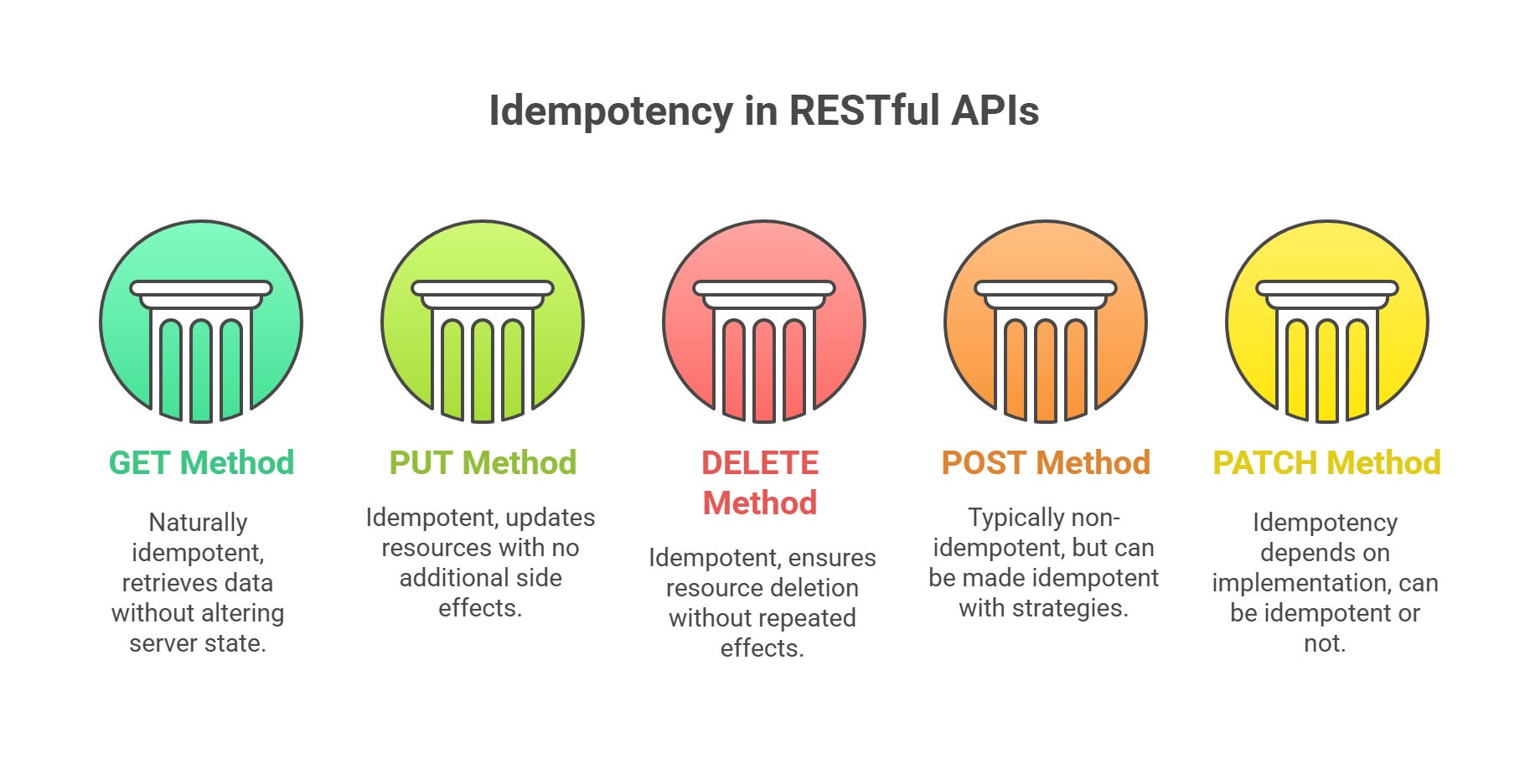
Use HTTP methods that are naturally idempotent (GET, PUT, DELETE) for operations that don’t require creating new resources. For POST requests, which are often non-idempotent, add idempotency key support to make them safe for retries.
In RESTful APIs, idempotency is often tied to HTTP methods. Here’s how common methods align with idempotency:
GET: Idempotent by nature. Fetching data doesn’t change server state, so repeated GET requests return the same result (assuming no external changes).
PUT: Idempotent. Updating a resource with the same data overwrites it with no additional side effects.
DELETE: Idempotent. Deleting a resource multiple times has the same effect as deleting it once (the resource remains deleted).
POST: Typically not idempotent. Creating a new resource (e.g., a new order) with each POST request can result in multiple resources being created.
PATCH: May or may not be idempotent, depending on the implementation. For example, updating a field with an absolute value (e.g., set balance = 100) is idempotent, but incrementing a value (e.g., balance += 10) is not.
Understanding the idempotency of HTTP methods helps in designing APIs that align with REST principles and handle retries correctly.
Note: Even though POST is inherently non-idempotent, it’s often used for operations that can be made idempotent using custom strategies.
3. Store Request State
Maintain a record of processed requests using a database or cache. The record should include:
The idempotency key.
The request payload (to verify it matches on retries).
The response (to return on duplicate requests).
A timestamp (to expire old records).
🔒 This is a premium post — an extended deep-dive continuation of Part 1: Idempotency in APIs.
👉 To access the full content, continue reading via the Premium Series below:
➡️ Get Access via Gumroad
🏷️ What You Get with Premium Membership:
🔓 As a Premium Member, you'll receive:
Sunday Premium Exclusive:
Deep dives into System Design Trade-Offs to sharpen your decision-making skills
Includes real-time case studies, architecture breakdowns, and expert analysis
Tailored interview prep material to help you stand outEvery Friday – Exclusive Deep Dive Posts:
Actionable insights with real-world examples, diagrams, and system architecture walkthroughs
Built to support both learning and implementationEarly Access:
Be the first to access system design templates, architecture diagrams, and checklistsBonus Content:
Unlock the "Architect’s Notebook": extended Q&A, cheat sheets, mental models, and hard-earned lessonsLifetime Archive Access:
Instantly browse all past premium posts and resources — foreverEmail Support & Priority Topic Requests:
Reach out with questions or request custom topics — get direct responses and fast turnarounds💡 Ideal for developers preparing for system design interviews, working in distributed systems, or building scalable APIs.